The most overwhelming aisle in the store — now with no one to ask.
First-time parents face the most consequential purchases of their lives with no experience to draw on. The category is dense with jargon and stakes: LATCH systems, JPMA certification, five-point harnesses, infant vs. convertible seats. It's expensive, it's safety-critical, and it's bewildering.
So parents research — heavily — and they buy where they're taught. If Target couldn't help them decide, they'd decide somewhere else and buy there too. The assortment was on the shelf; the guidance that turns a nervous browser into a confident buyer was missing.
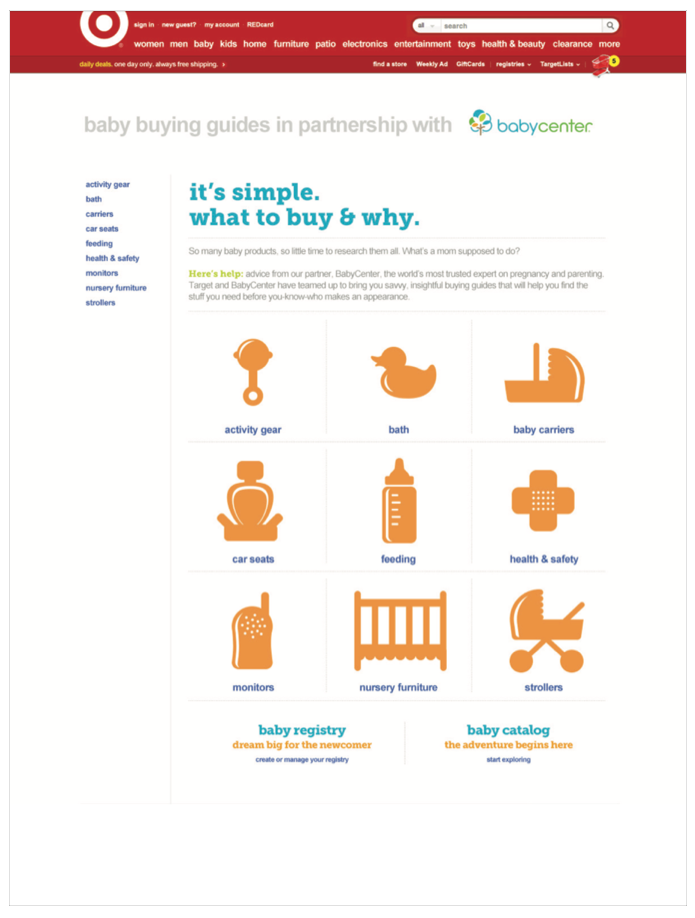
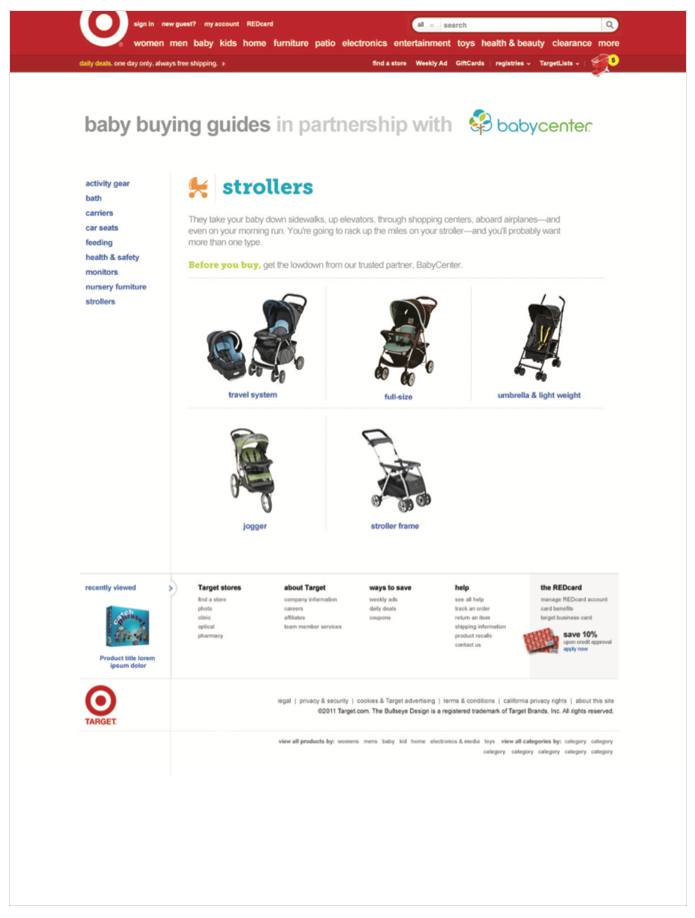
Borrow the most trusted voice in the room.
I stepped in to represent Product Content in Baby360 — Target's enterprise baby initiative — during a period of team transitions, and drove the buying-guide program end to end. The strategic bet: pair Target's assortment with BabyCenter, the parenting authority moms already trusted, so every recommendation carried borrowed credibility.
I wrote and shaped the guidance, aligned each guide to real search terms and Target's product taxonomy so it was findable, and partnered with Baby buyers to choose exactly which products BabyCenter's experts would review. Trusted advice and shoppable product, in the same place, at the same moment.
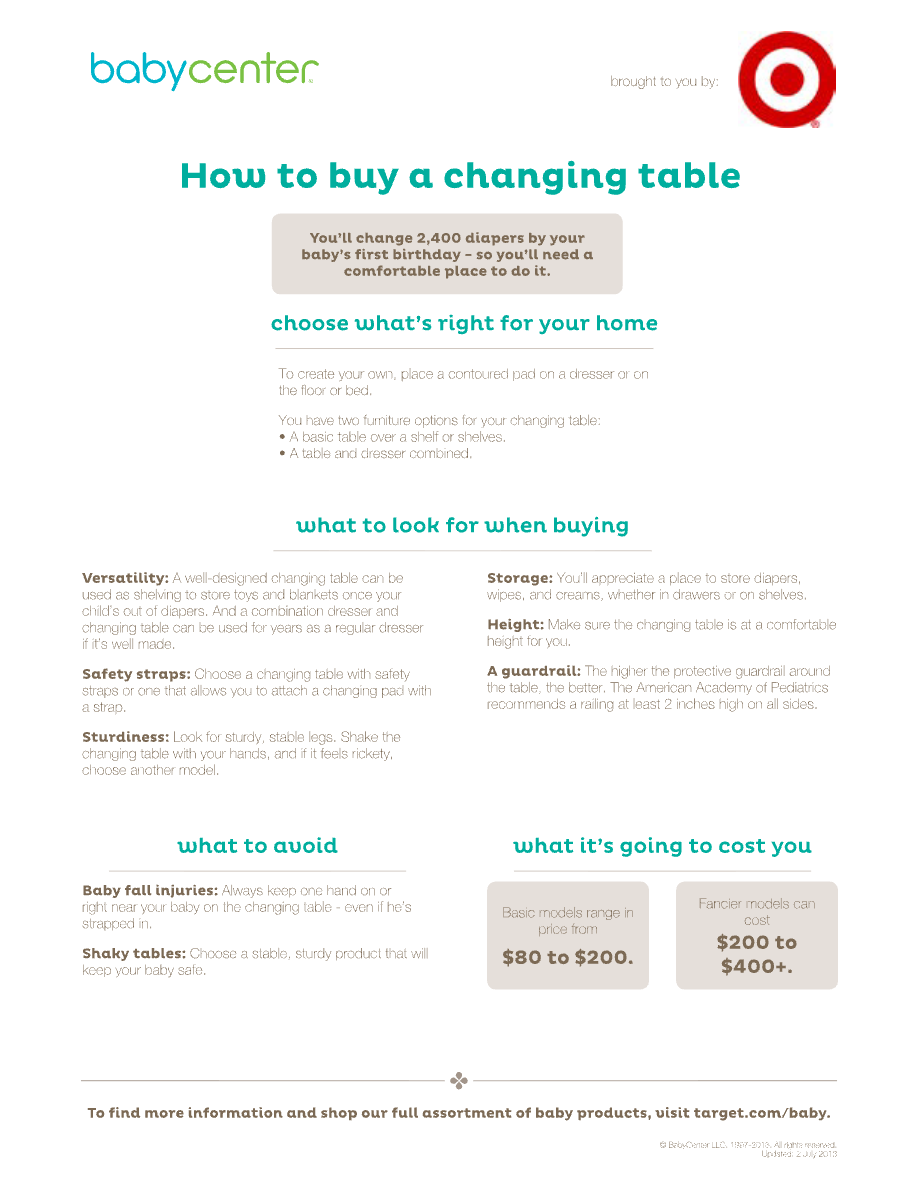
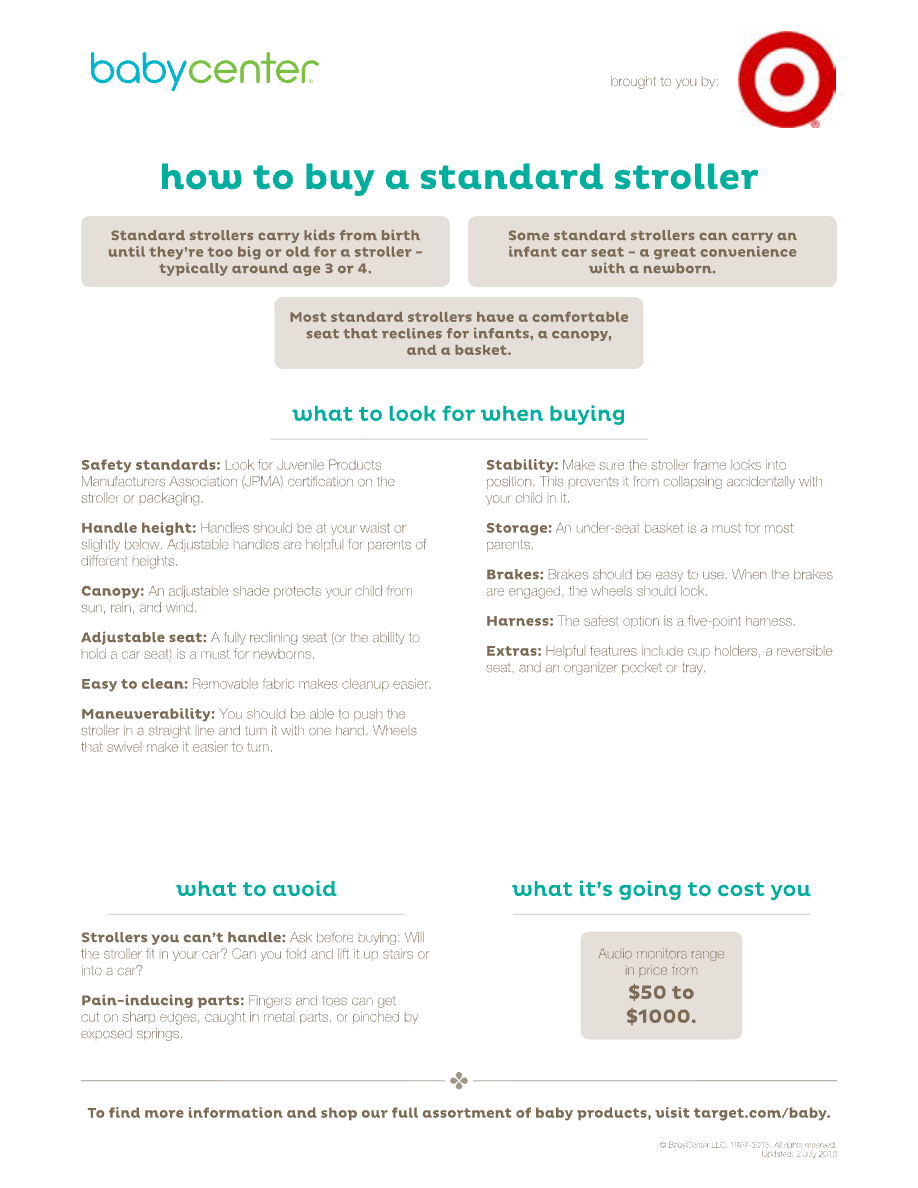
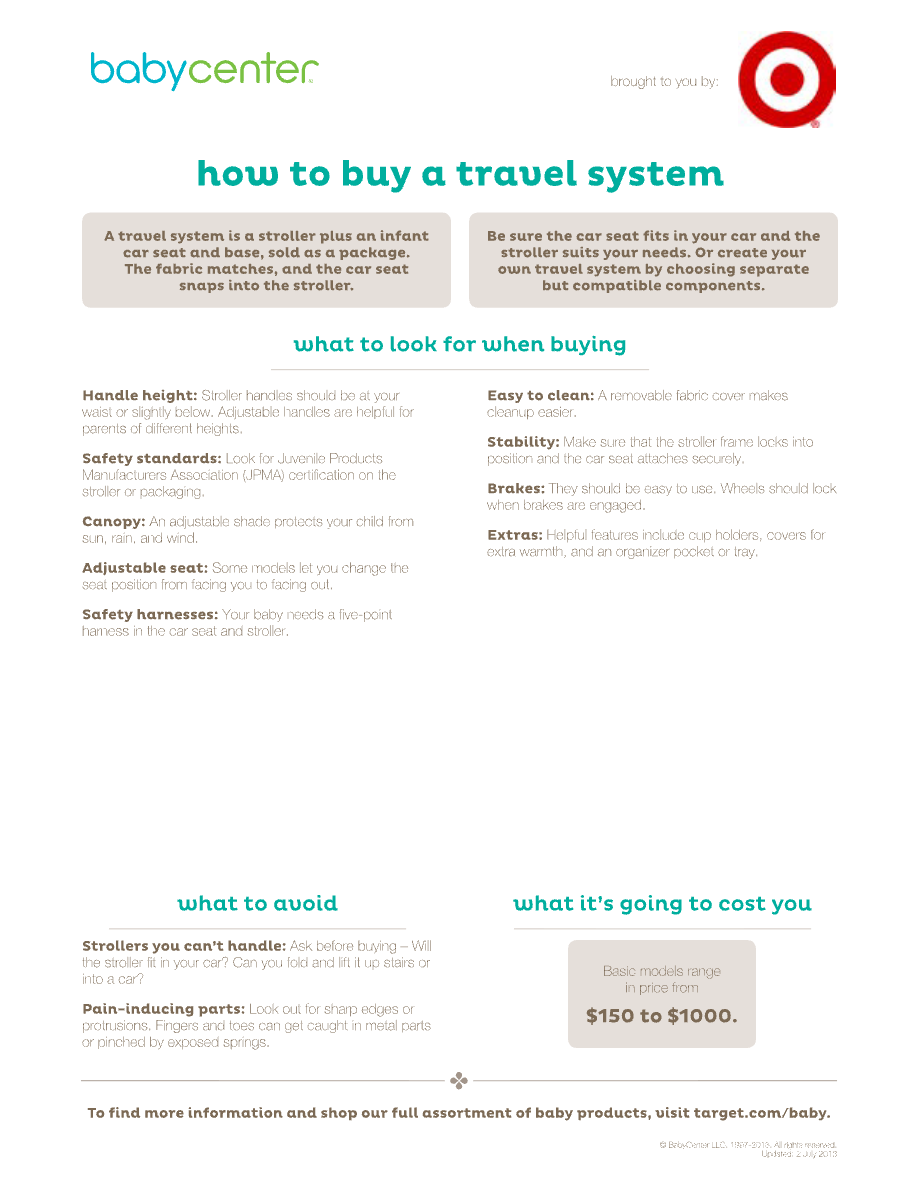
One template that answered the four questions every parent asks.
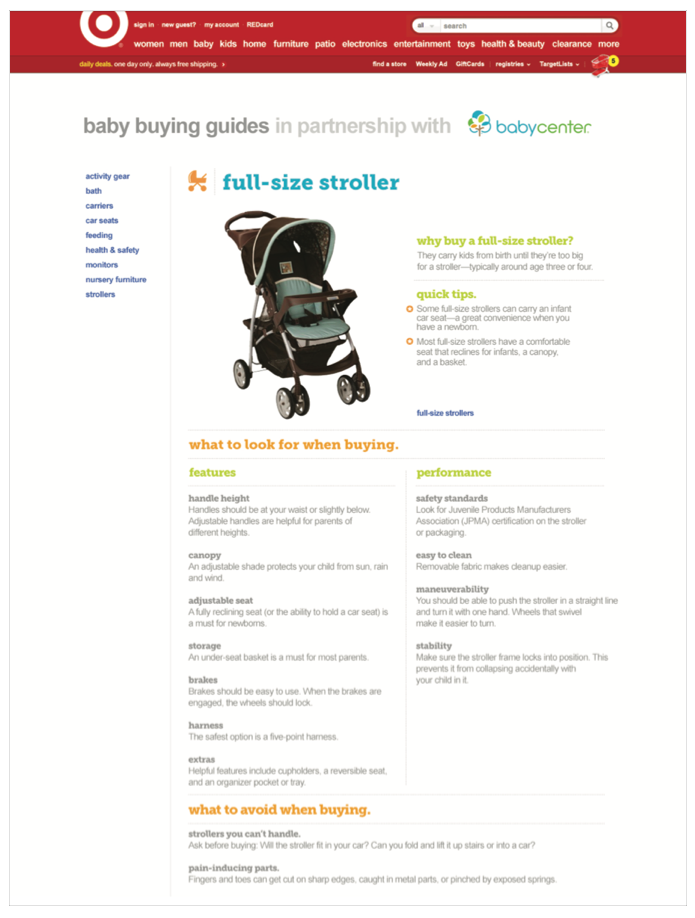
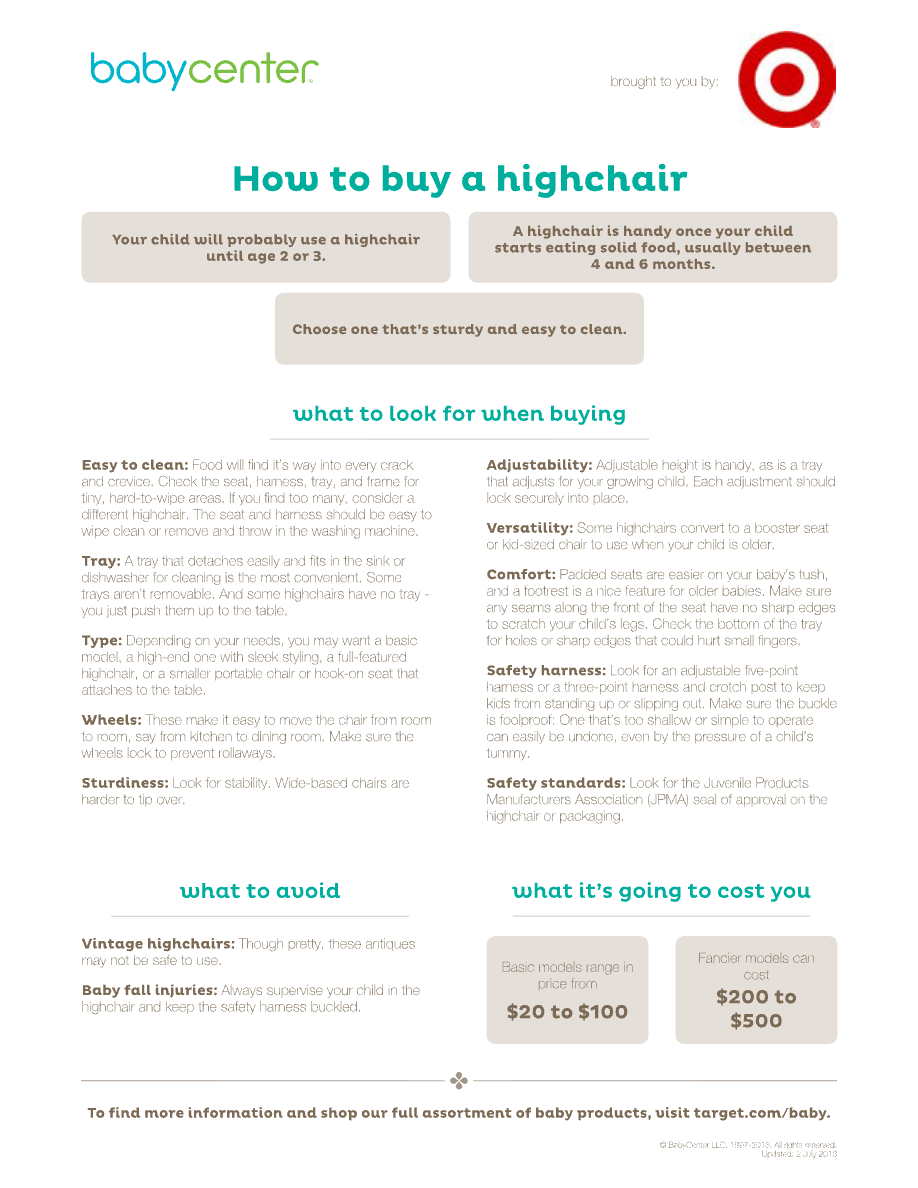
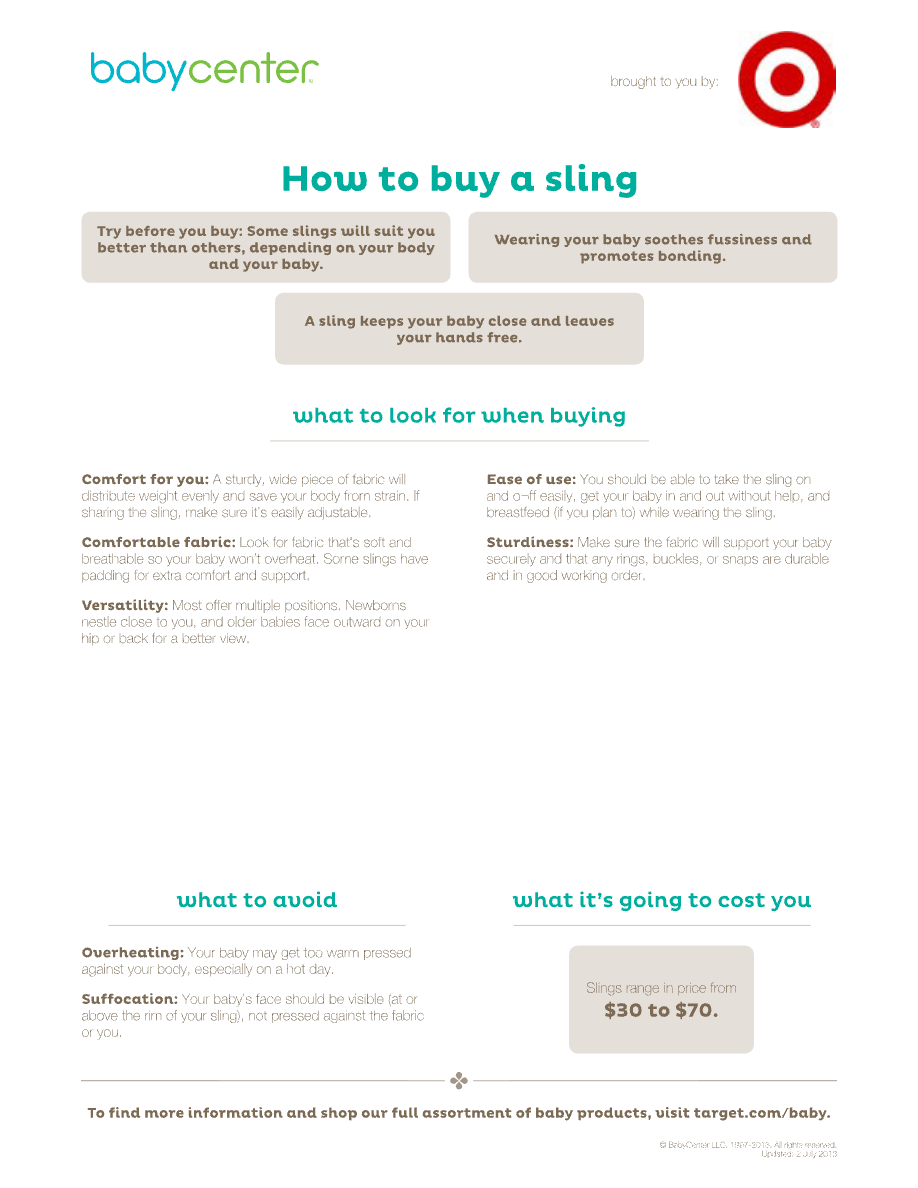
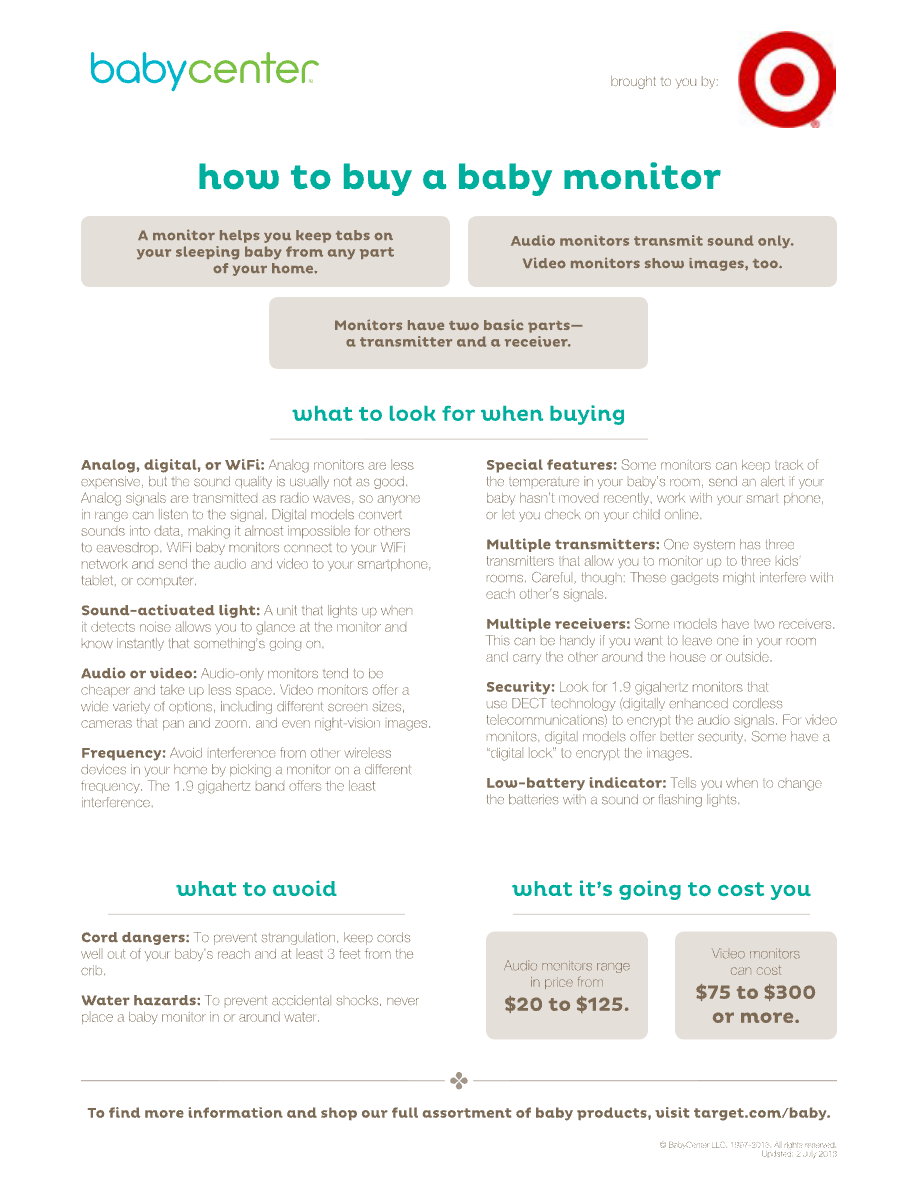
Rather than write nine one-off articles, I designed a single repeatable structure — consistent, scannable, and built to scale across the whole catalog. Every guide answered the same four questions a nervous parent actually asks, in the same order, every time.
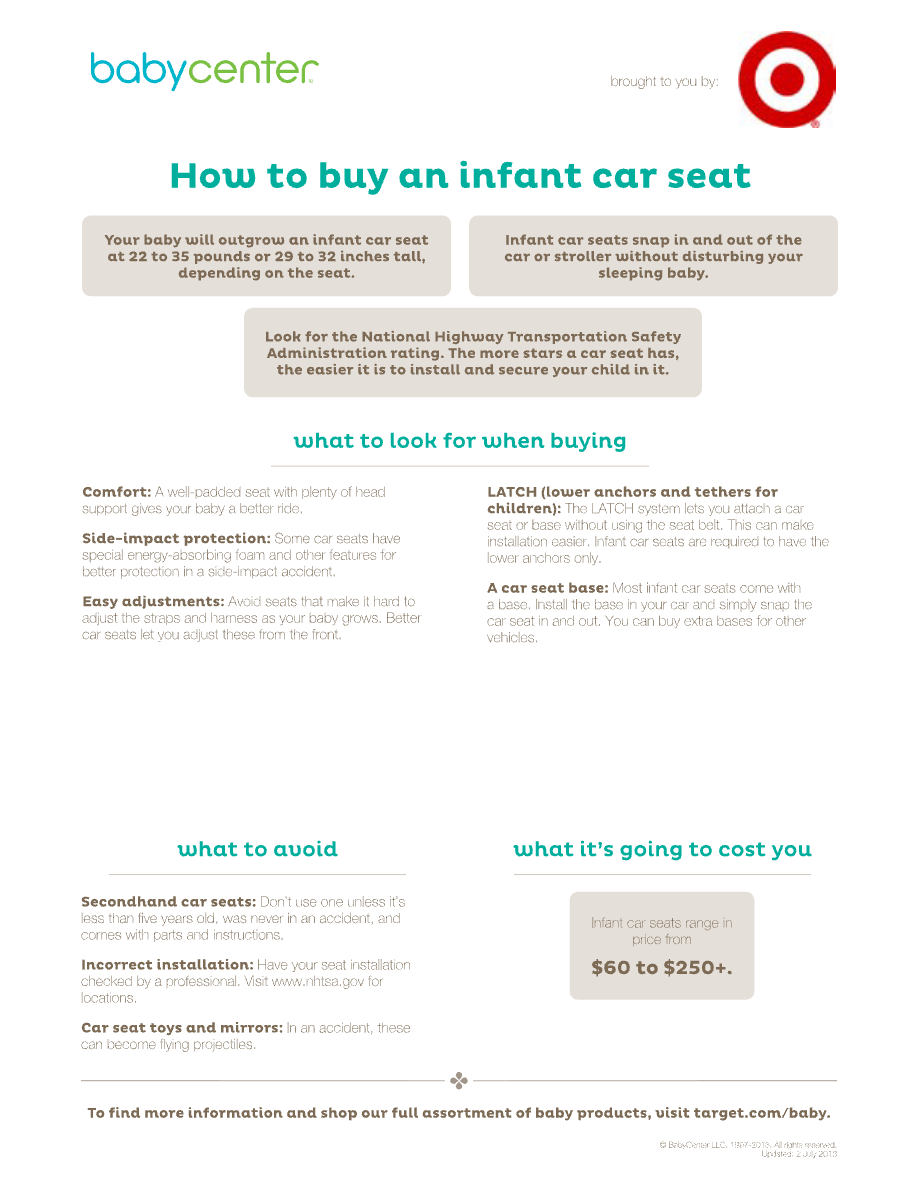
What to look for
The handful of attributes that actually matter — comfort, safety standards, adjustability — in plain language.
What to avoid
The traps: secondhand car seats, crib bumpers, sharp edges. Honest cautions build more trust than a sales pitch.
What it costs
Honest price ranges, basic to premium, so a guest could set expectations before they ever added to cart.
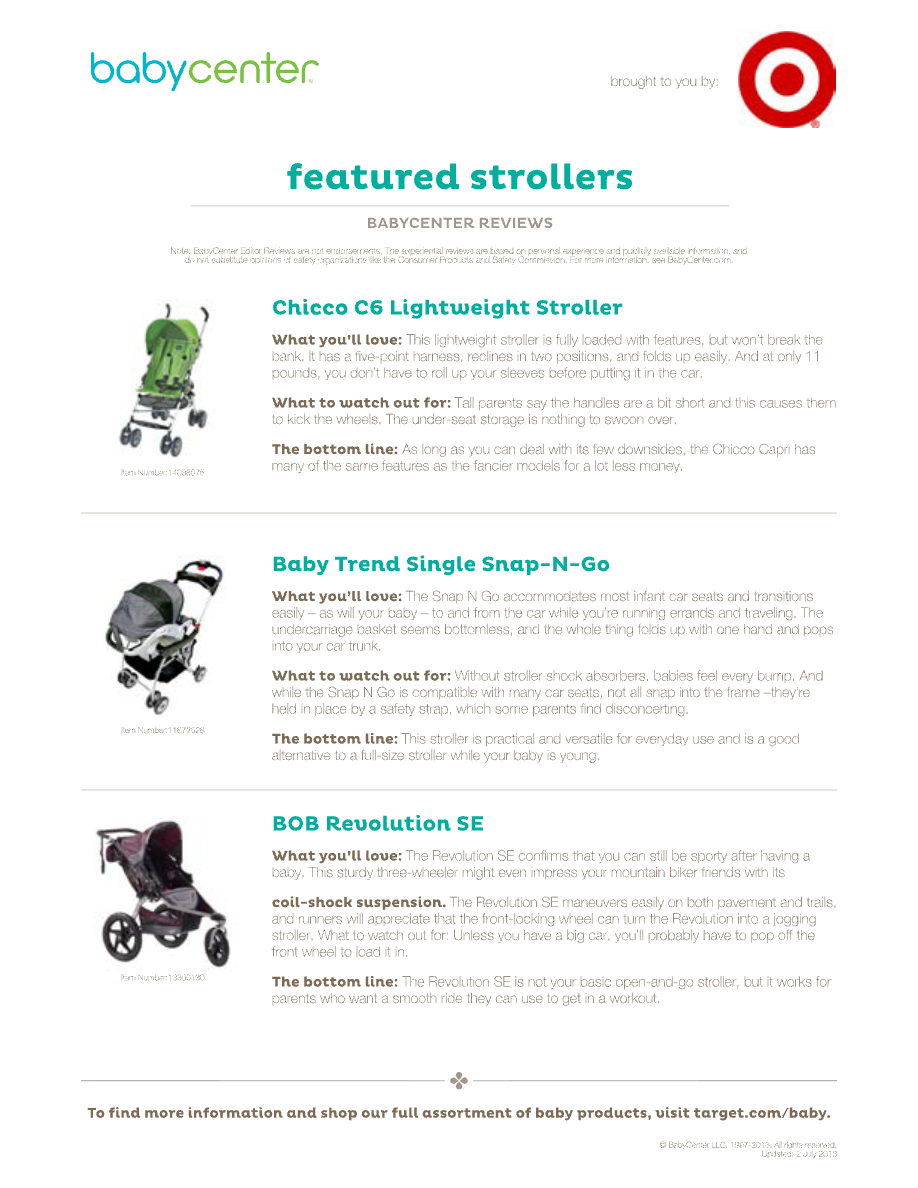
Featured picks
Specific, shoppable products carrying BabyCenter editor reviews — the bridge from learning to buying.
Honest, human reviews — the part that earned trust.
Featured products carried BabyCenter editor reviews written to a strict, repeatable shape: what you'll love, what to watch out for, and the bottom line. The reviews named real trade-offs — short handles, no shock absorbers — and a disclaimer made clear they were experiential, not endorsements. That candor is precisely what made a recommendation believable.
Fully loaded but won't break the bank — a five-point harness, two recline positions, and an easy fold. At only 11 pounds, you don't have to roll up your sleeves to put it in the car.
Tall parents say the handles are a bit short, which causes them to kick the wheels. The under-seat storage is nothing to swoon over.
Many of the same features as the fancier models, for a lot less money.
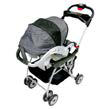
Accommodates most infant car seats and transitions easily to and from the car on errands. The undercarriage basket seems bottomless, and the whole thing folds with one hand and pops into your trunk.
Without shock absorbers, babies feel every bump. And not all car seats snap in — some are held by a safety strap, which some parents find disconcerting.
Practical and versatile — a good alternative to a full-size stroller while your baby is young.
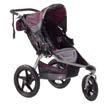
Proof you can still be sporty after having a baby. A sturdy three-wheeler with coil-shock suspension that maneuvers easily on pavement and trails — lock the front wheel and it becomes a jogging stroller.
Unless you have a big car, you'll probably have to pop off the front wheel to load it in.
Not your basic open-and-go stroller — but ideal for parents who want a smooth ride and a workout.
Written for a parent reading at 2 a.m., one-handed.
The guides live or die at the sentence level. Specs had to become things a tired first-time parent could picture, check with their hands, and act on — without ever feeling sold to.
"You'll change 2,400 diapers by your baby's first birthday — so you'll need a comfortable place to do it."Changing table guide · opener
Nobody wakes up wanting a changing table. One startling, checkable number turns "a piece of furniture" into "2,400 repetitions of a task your back will feel" — and suddenly the purchase justifies itself.
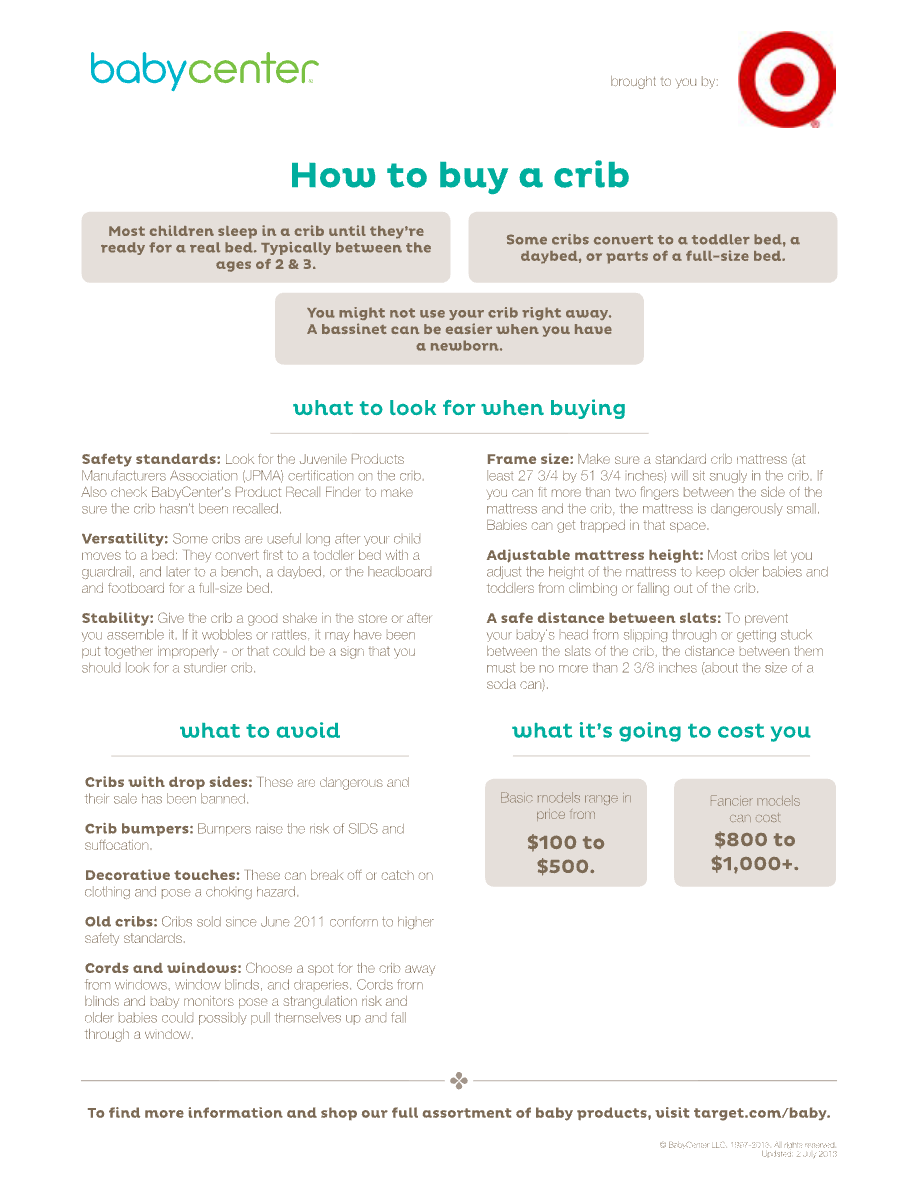
"The distance between the slats must be no more than 2⅜ inches (about the size of a soda can)."Crib guide · what to look for
2⅜ inches is a number you'd have to look up in the store aisle. A soda can is a measuring tool every parent is already holding. The same move runs through the guides: "if you can fit more than two fingers between mattress and crib, it's dangerously small."
"Secondhand car seats: don't use one unless it's less than five years old, was never in an accident, and comes with parts and instructions."Car seat guide · what to avoid
A retailer telling you when not to buy. Every guide carried a "what to avoid" section and a frank "what it's going to cost you" range — basic to premium — because cautions are what make the recommendations credible.
"Q: Do I have to have a car seat? A: Yes."Car seat guide · FAQ
The FAQs were written in the parent's voice and answered with the verdict up front — then the law, the weight limits, and the why. No question was too basic to ask out loud; that's exactly what a first-time parent needs permission for.
The buying guides moved product, but the bigger proof was the pattern: a parallel expert-review pilot in Toys with CommonSense Media lifted conversion 130% and cart additions 63% — confirming that trusted, third-party expertise at the point of decision works in any category.
"Parents don't need more options. They need someone they trust to help them choose."
This began as a spin-off of my Target size-chart work — the same conviction, scaled to a harder category: put trustworthy, structured information at the exact point of decision, and design it to scale. Whether the question is "will it fit?", "which car seat is safe?", or "can I trust that this is what it claims to be?", the answer is the same — and a trusted partner's voice is often what closes the gap.