Every week before a first automation is a week without value.
UiPath was expanding past the developer audience it had been designed around, and the platform assumed knowledge business users didn't have. They arrived without orientation, hit a steep curve, and were slow to reach anything that felt like value — while internally, every team was building its own onboarding from scratch.
So the question was never how do we explain the UI? It was: how do we help someone build enough of the right mental model to succeed, without overwhelming them?
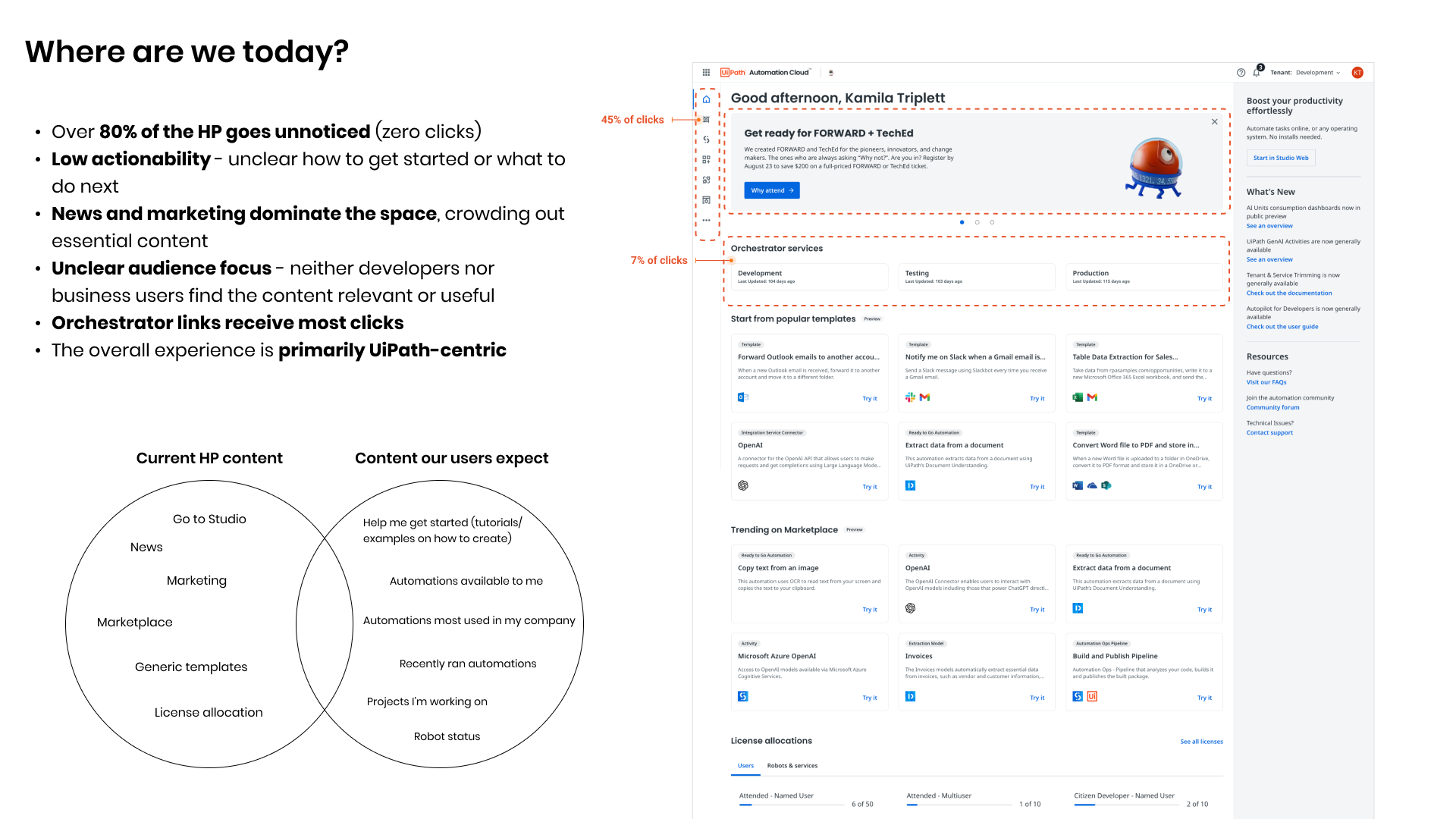
Treat onboarding as continuous, not a first run.
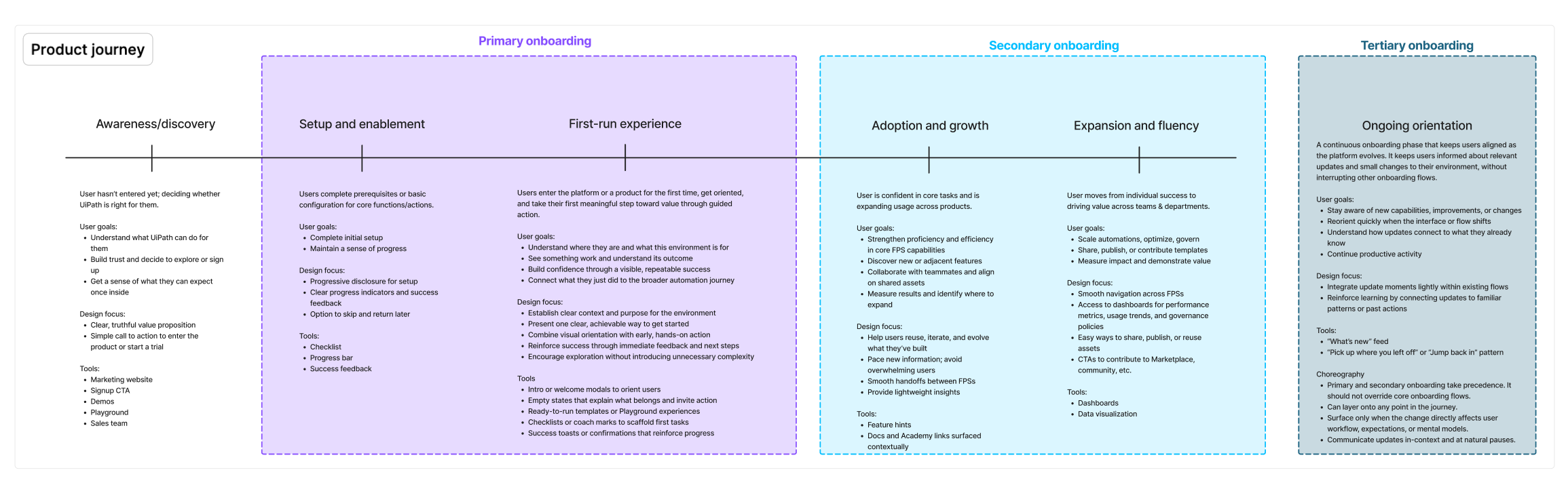
People don't need less information as they learn — they need different information. So onboarding couldn't be a tutorial you graduate from. I defined three types, each with its own triggers, patterns, and rules for what happens when more than one applies: primary to get someone to first success, secondary to support growing proficiency without re-explaining fundamentals, and tertiary for ongoing orientation that never blocks.
Four principles governed all of it: value first · give people an anchor · progressive disclosure · self-served.
Own the page on day zero. Then get out of the way.
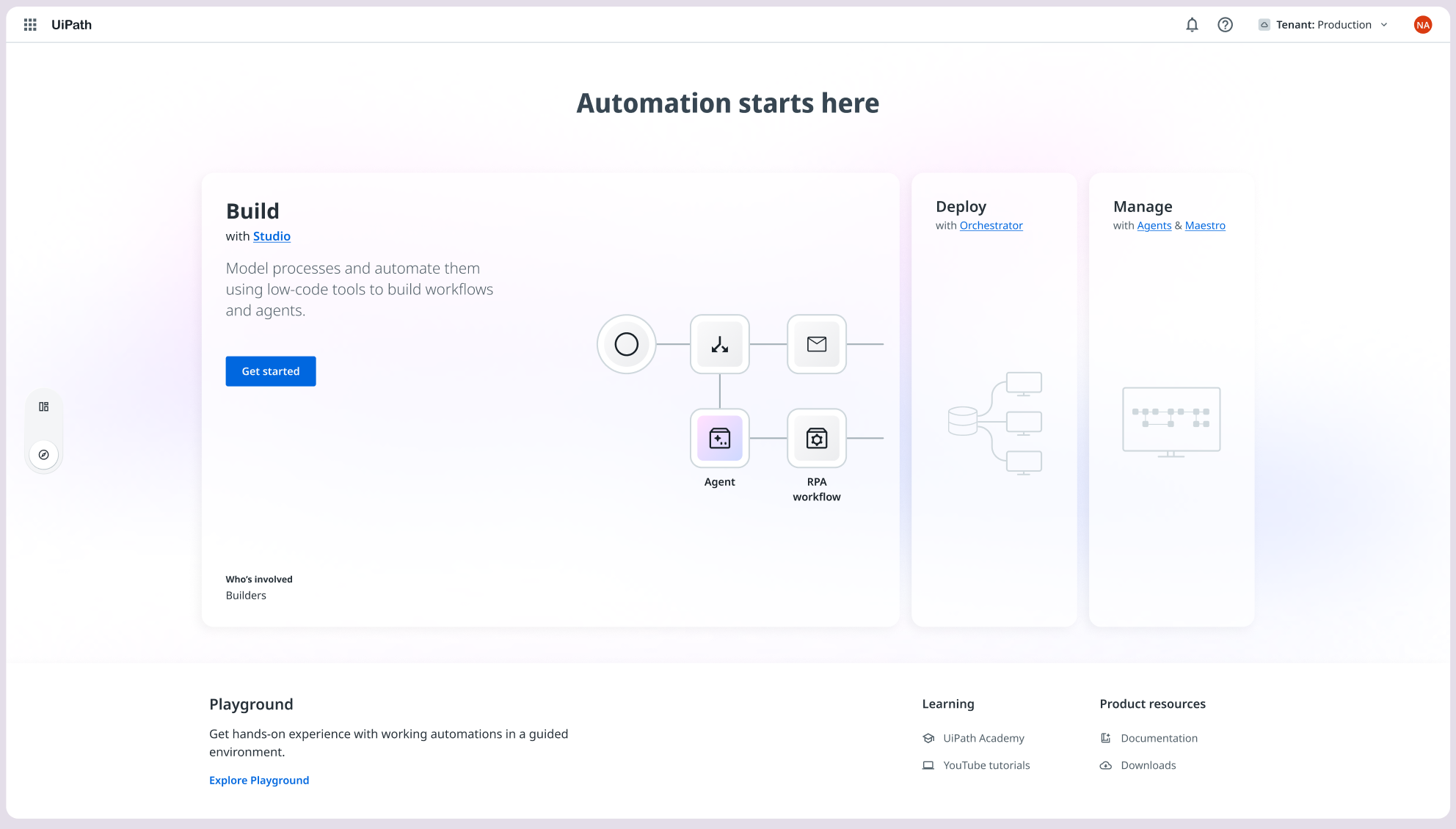
On the platform homepage, the welcome screen orients people around the three phases of an automation lifecycle — build, deploy, manage — and hands over one appropriate starting point based on what they can actually act on.
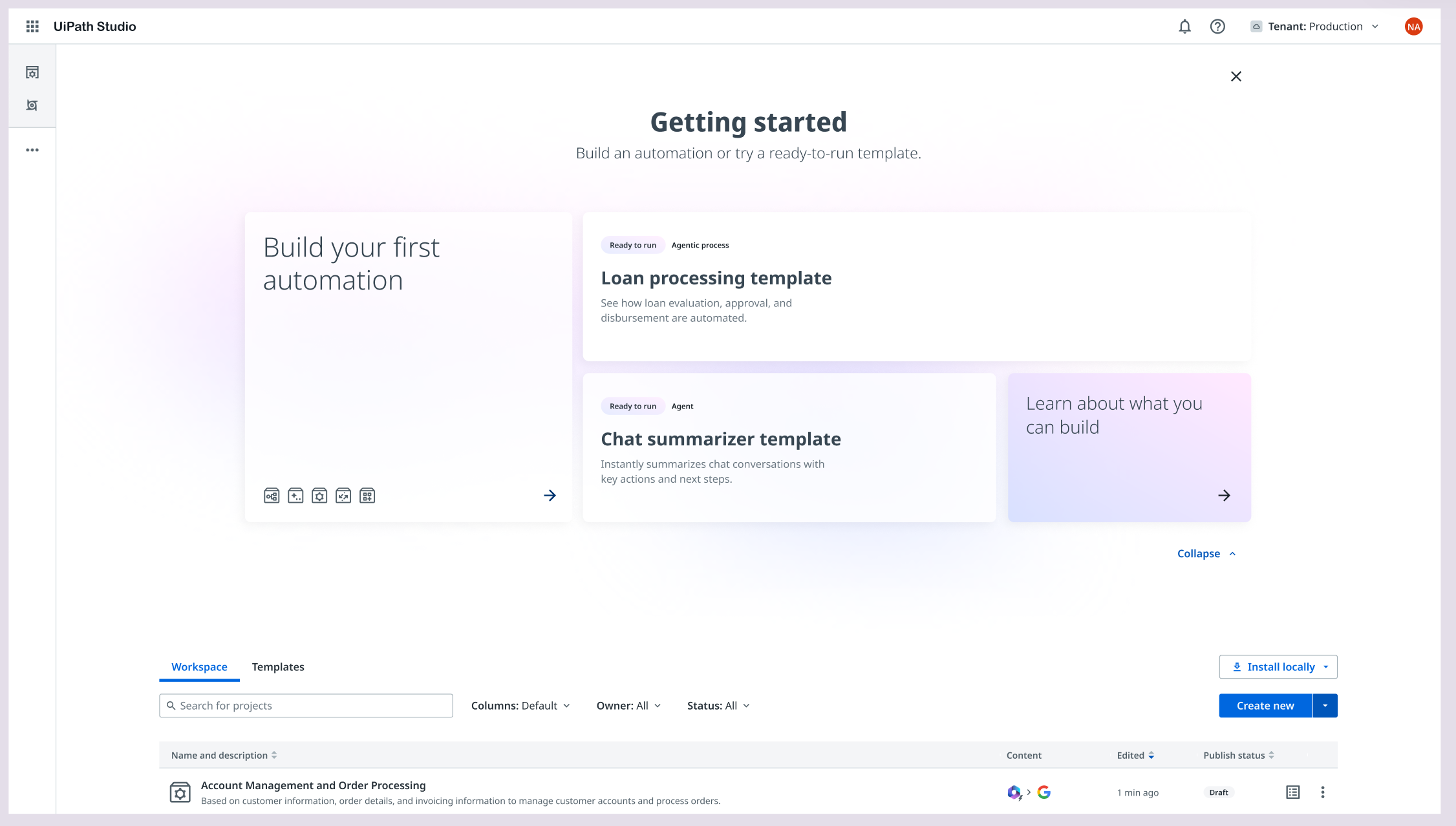
In Studio, the onboarding section takes the entire page on first access, reveals detail in place rather than navigating away, and recedes as someone starts building. Three ways in, sized to how much help you want: a guided path, ready-to-run templates, or a way to learn what's possible without committing to anything.
Tells you a beginning exists. Not what you'll be doing, what you'll have when you're done, or whether it's meant for someone like you.
Names the verb, the object (an automation — a canonical term from the object model), and the stage. The first action a new user takes is also the first concept they learn.
The experience wasn't the deliverable. The guide was.
Two teams solving onboarding twice is how a platform ends up with contradictory first impressions. The work became a guide for designers, PMs, and content — pattern by pattern, with usage, anatomy, behavior, and placement documented, plus what each pattern is explicitly not for.
It also gave teams a process: define your time to wow and time to aha, set the metrics, phase it crawl / walk / run, wireframe the flow, define your content blocks — then use the existing components and contribute back what you build.
